Chess
How to Play Chess
Chess boasts a rich history of over 1,400 years and remains a popular game throughout the world. While some find it intimidating, millions have mastered it, and you can too.
In this article, you'll learn:
- How to set up a chessboard
- How each piece moves
- What is Chess Payday
- Basic chess rules
- Special moves like en passant, castling and pawn promotion
- How to start playing and basic strategies
- The best apps to practice on your phone
By the end, you'll be ready to leave checkers behind to embrace chess mastery and even win real cash with Chess Payday from Skillz.
How to Set Up the Chessboard
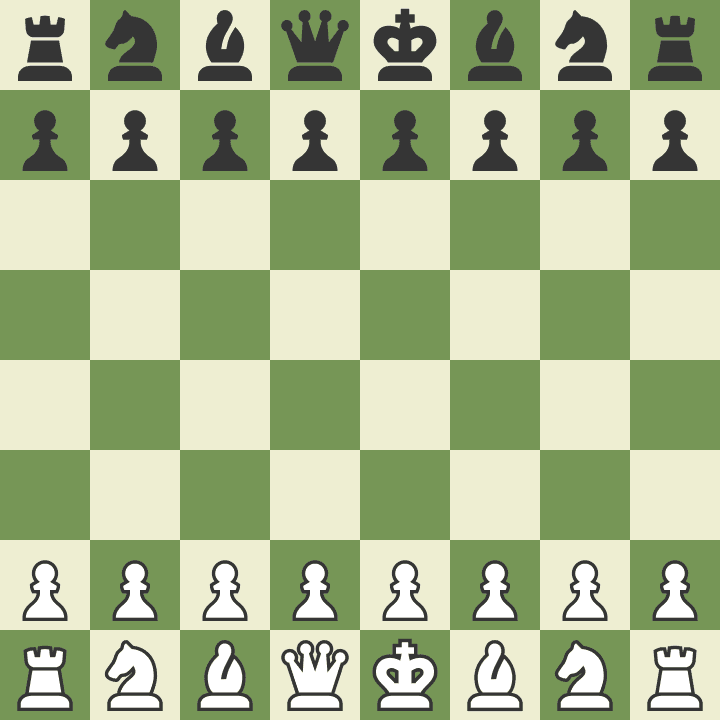
The chessboard is an 8x8 grid of alternating white and black squares. The white (or light-colored) square should be in the bottom-right corner for each player. Here's how to set up the pieces:
- Rooks: Place on the bottom corners.
- Knights: Next to the rooks.
- Bishops: Next to the knights.
- Queen: On the square of its own color (white queen on white, black queen on black).
- King: On the remaining central square.
Black and white pieces should face each other directly, with identical setups on opposite sides. The second rank (the row closest to each player) is filled with pawns.
How Chess Pieces Move
Although the boards are similar, chess is much different than checkers. Each chess piece is limited to making specific moves except for the queen (the most powerful piece in the game of chess). Learn the basics of how chess pieces move below.
How Pawns Move
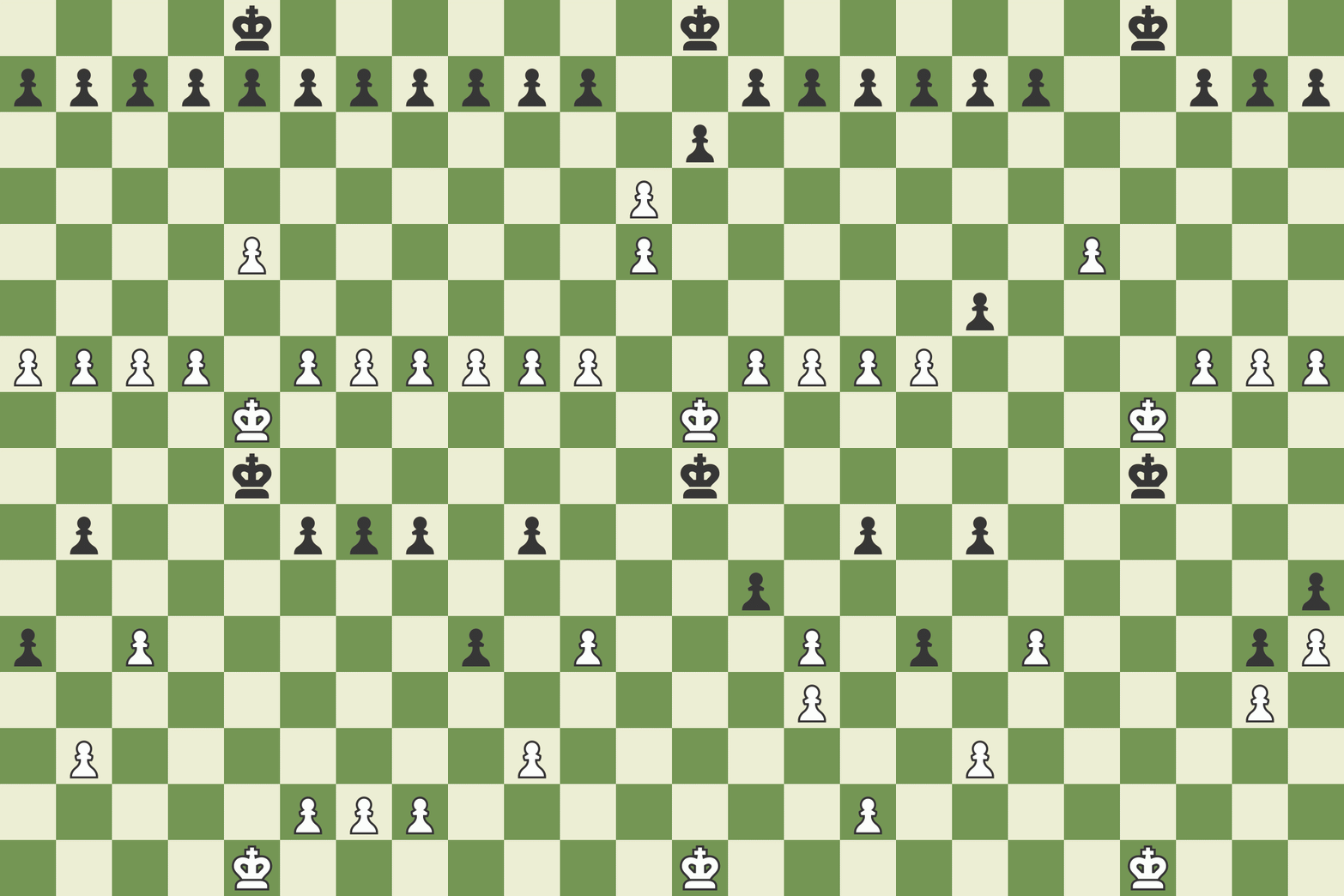
Pawns can move one square forward, or two squares from their initial starting position if both are unoccupied. Pawns move diagonally to capture an opponent’s piece, never forward.
How Rooks Move
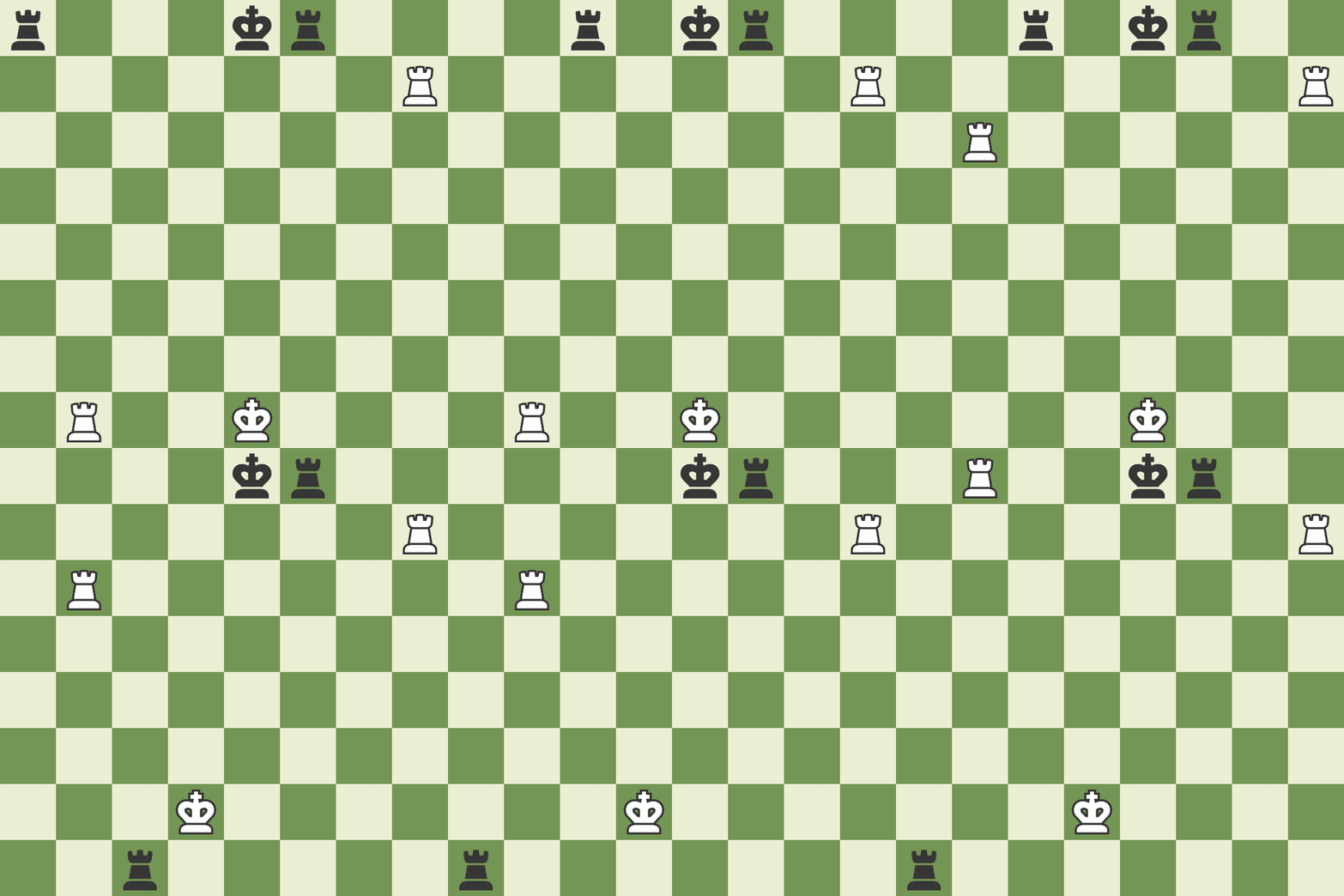
Rooks can move any number of squares along rows or columns but not diagonally. They capture by landing on an opponent's piece and cannot pass through same-color pieces.
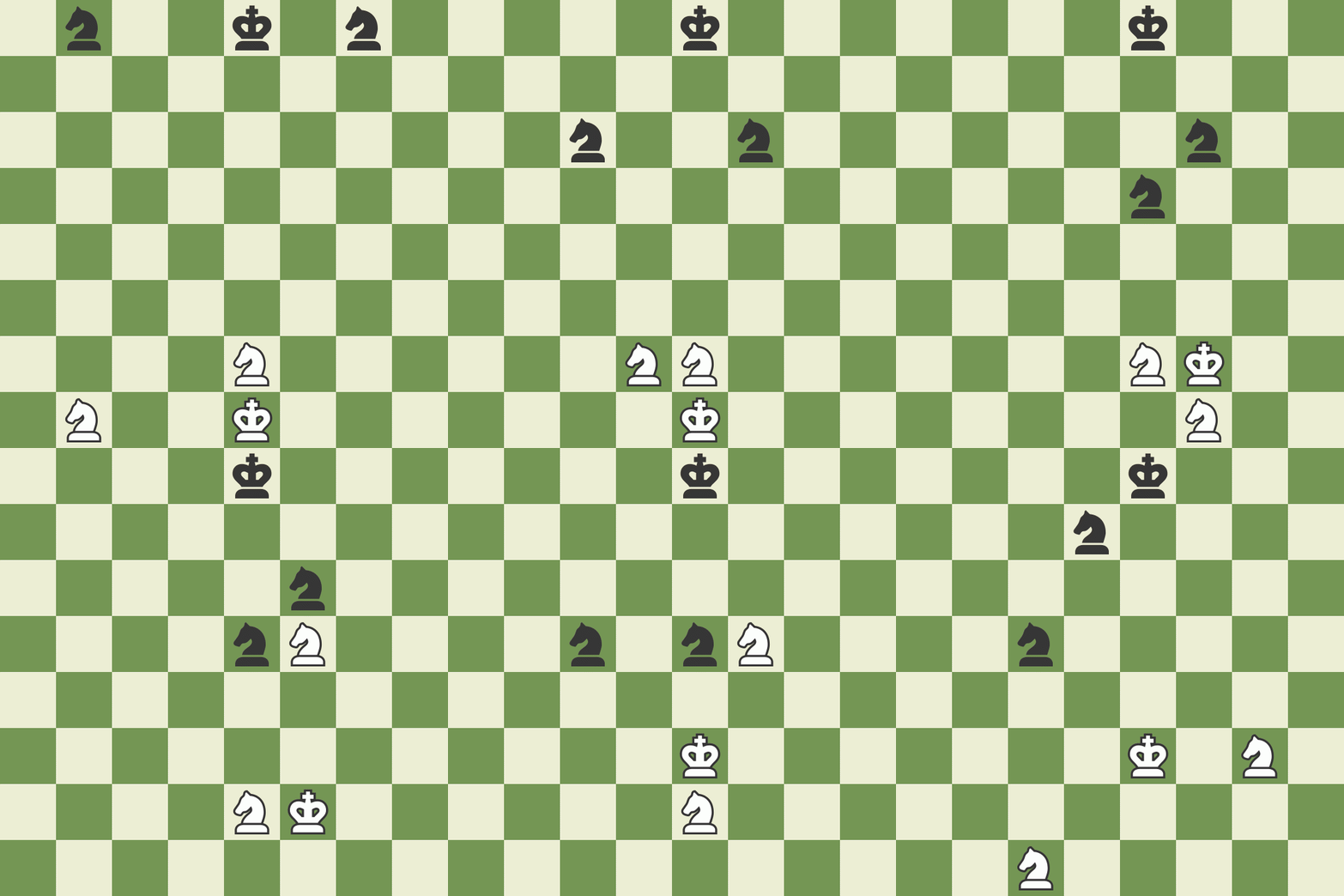
How Knights Move
Knights can jump in an "L" shape: two squares in one direction and one at a right angle, or one square in one direction and two at a right angle. They capture by landing on an opponent’s piece.
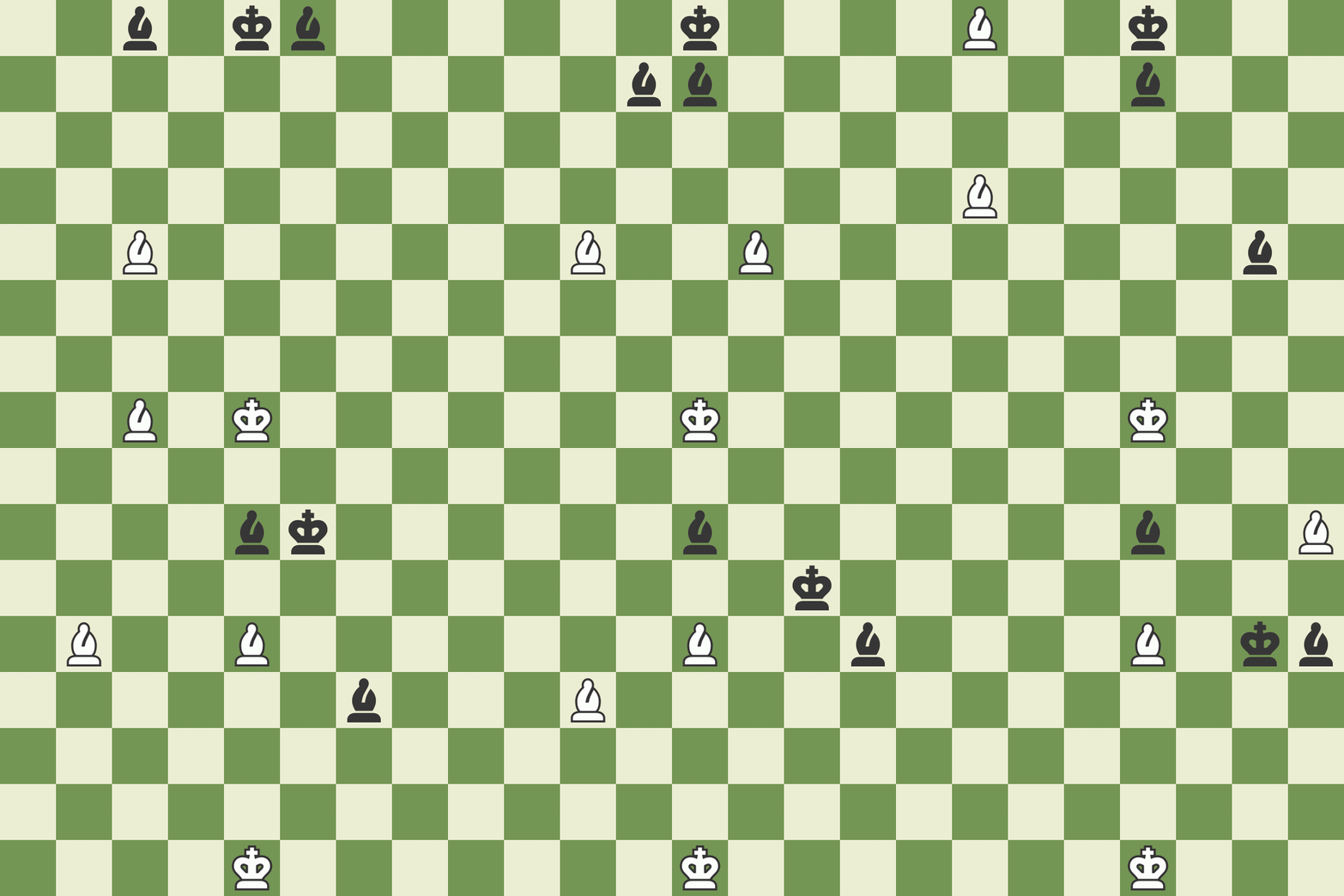
How Bishops Move
Bishops can move diagonally any number of squares of the same color. They capture by landing on an opponent’s piece and can’t move horizontally or vertically.
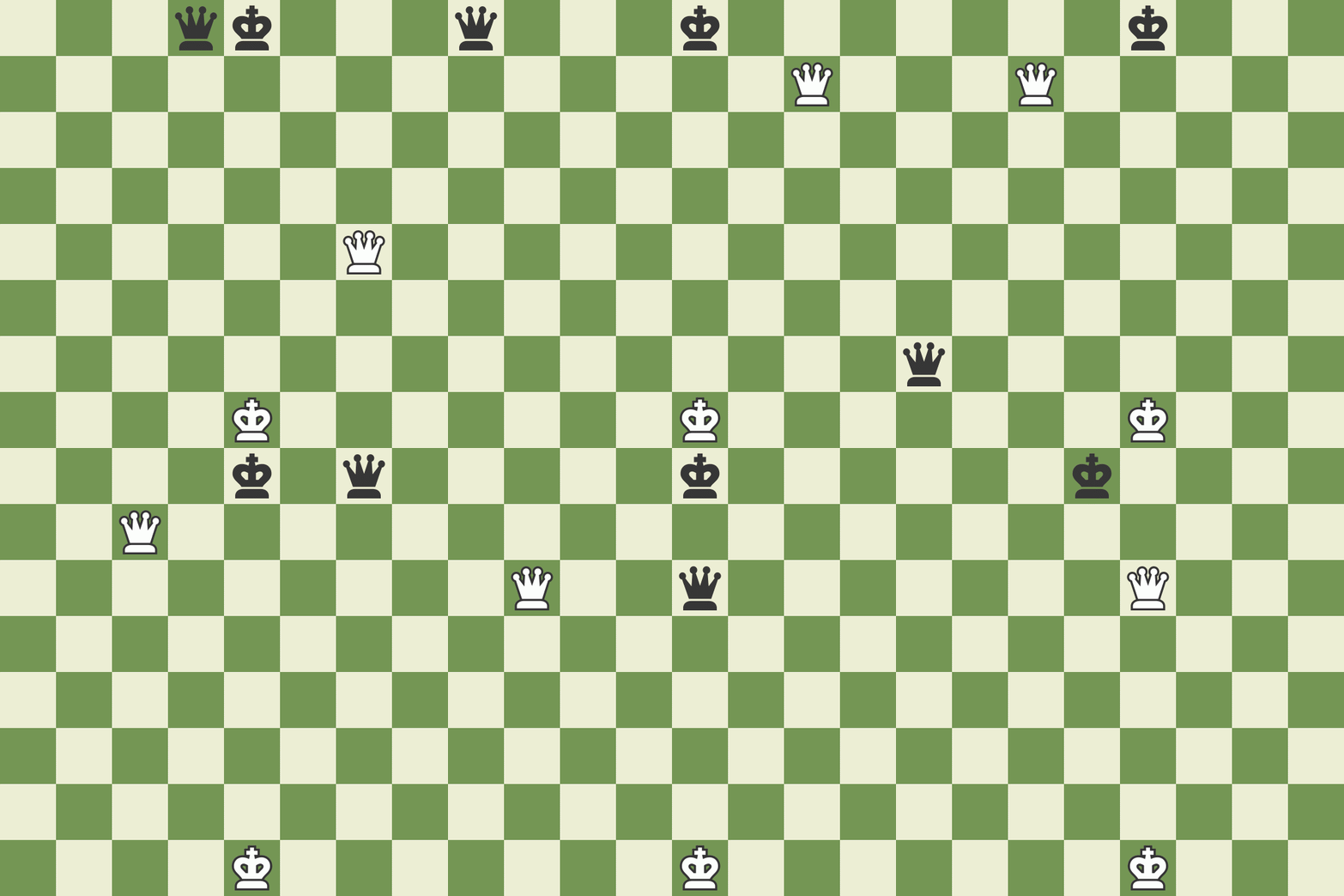
How the Queen Moves
The queen can move any number of squares in a straight line, diagonally, horizontally, or vertically, but only in one direction per turn. Queens capture by landing on an opponent's piece.
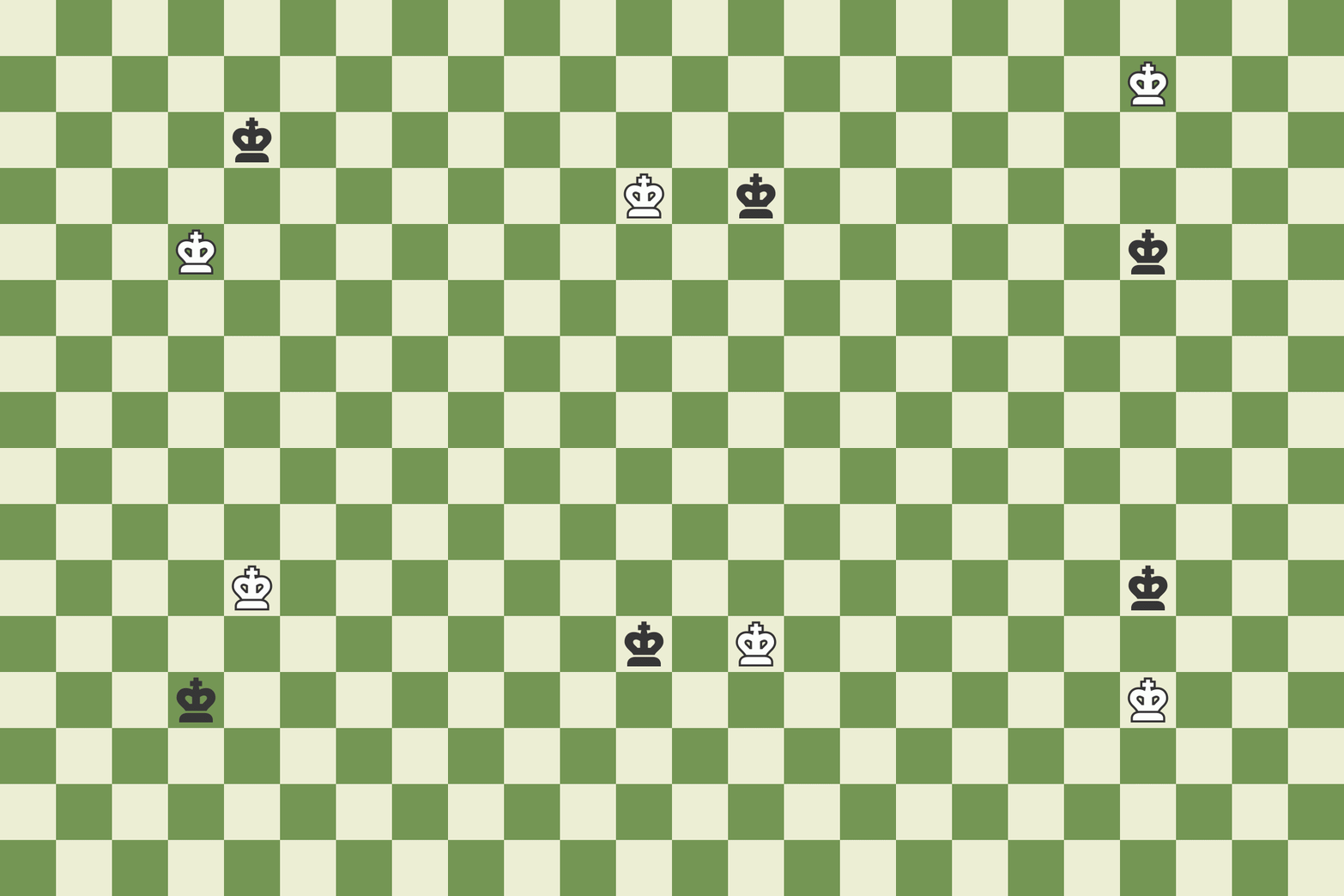
How the King Moves
The king can move only one square in any direction and captures by landing on an opponent's piece. It cannot be captured or moved into check. When the king is checkmated, meaning it has no remaining moves, the game ends.
Rules of Chess
Once you know how each chess piece moves, the rules are pretty simple. A few basic Chess rules you should know before you start playing include:
White always moves first
Once a white piece has been moved, each player takes turns making moves. In competitive chess, players may only get a limited amount of time to make moves.
The game ends when an opponent’s king is checkmated, or it ends in a stalemate/draw.
Continue reading to learn special chess moves and rules.
What is Chess Payday?
Chess Payday powered by Skillz, is a mobile chess app that combines exciting gameplay, the thrill of competing with real players and the opportunity to win real cash prizes. With quick rounds, this simple and fun take on chess lets you use your skills, not luck, to earn real prizes. Thanks to Skillz’s proprietary matching algorithm, you’ll only be matched with players on your same skill level, ensuring that the competition is always fair. Start playing Chess Payday today!
Tips & Tricks to Win with Chess Payday
- Make quicker moves to earn a higher move bonus points.
- Winner gets a bonus for Checkmating.
- Winner gets a bonus for remaining time on their clock.
- The game ends if one of the player’s clocks runs out of time.
Special Chess Rules
Here are key special moves in chess:
- En Passant: If a pawn moves two squares forward from its starting position and lands beside an opponent’s pawn, that opponent can capture it en passant, but only on the next move.
- Castling: The king moves two squares towards a rook, which then jumps over the king to the next square. Castling is not allowed if the king is in check, if there’s a piece between the king and rook, if castling puts the king in check, or if either piece has moved previously. Castling kingside is "short," while castling queenside is "long."
- Pawn Promotion: When a pawn reaches the opposite end of the board, it can be promoted to any piece except a king and cannot remain a pawn.
How to Get Started
Everyone learns differently. You might start by setting up a chessboard and practicing alone, or you could jump straight into games against real players or chess teachers. The important thing is to start playing.
Potential Benefits of Playing Chess
Learning chess can enhance various aspects of life, including:
- Improved Memory: Enhances your ability to recall and apply complex strategies
- Better Problem-Solving Skills: Develops critical thinking and analytical skills
- Enhanced Concentration: Improves focus and attention span
- Strategic Planning: Strengthens long-term planning and foresight
- Increased Creativity: Encourages creative thinking and innovation
- Boosted Cognitive Skills: Supports mental agility and problem-solving abilities
- Perspective-Taking: Enhances the ability to understand different viewpoints
- Emotional Resilience: Teaches patience, persistence and frustration management
- Protection Against Dementia: May help reduce the risk of cognitive decline in old age
- Social Interaction: Provides opportunities for social engagement and relationship building
How to Win at Chess
Winning in chess involves checkmating your opponent’s king. To understand how to achieve this, familiarize yourself with the concepts of check, checkmate and draw/stalemate.
What is Check?
Check happens when the king is under threat of capture by an opponent’s piece. When in check, the king must move to a safe square, or capture the opponent’s piece to end the threat.
What is Checkmate?
Checkmate occurs when the king is in check and has no legal moves to escape the threat. This means the king is trapped and cannot avoid capture, resulting in a victory for the opposing player.
What is a Stalemate or Draw?
A chess game can end in a draw in three ways:
- Stalemate: The player has no legal moves but is not in check.
- Threefold Repetition: The same position occurs three times.
- Insufficient Material: Not enough pieces on the board to force a checkmate.
Basic Chess Strategies
For beginners, focus on these key strategies:
- Control the center of the board
- Develop your pieces quickly
- Castle early
- Avoid moving pawns without purpose
- Don’t risk your queen too early unless it’s part of a strategy
As you advance, explore learning about strategies like the Queen’s Gambit, Blackburne Shilling, and Fajarowicz Trap.
How to Practice Playing Chess
With the basics under your belt, it's time to play, practice and improve. Explore our curated selection of online chess games to advance from beginner to master. Challenge real opponents and even earn rewards—all from your phone. Start honing your skills and winning today!
Where to play Chess On Your iPhone or Android
Tired of learning about chess and ready to start playing? Check out Chess Payday, where you can compete with real players, for real cash and prizes.
Every game on the Skillz platform offers fair competition where you can play confidently against real players using your skills, not luck. Get started now!